
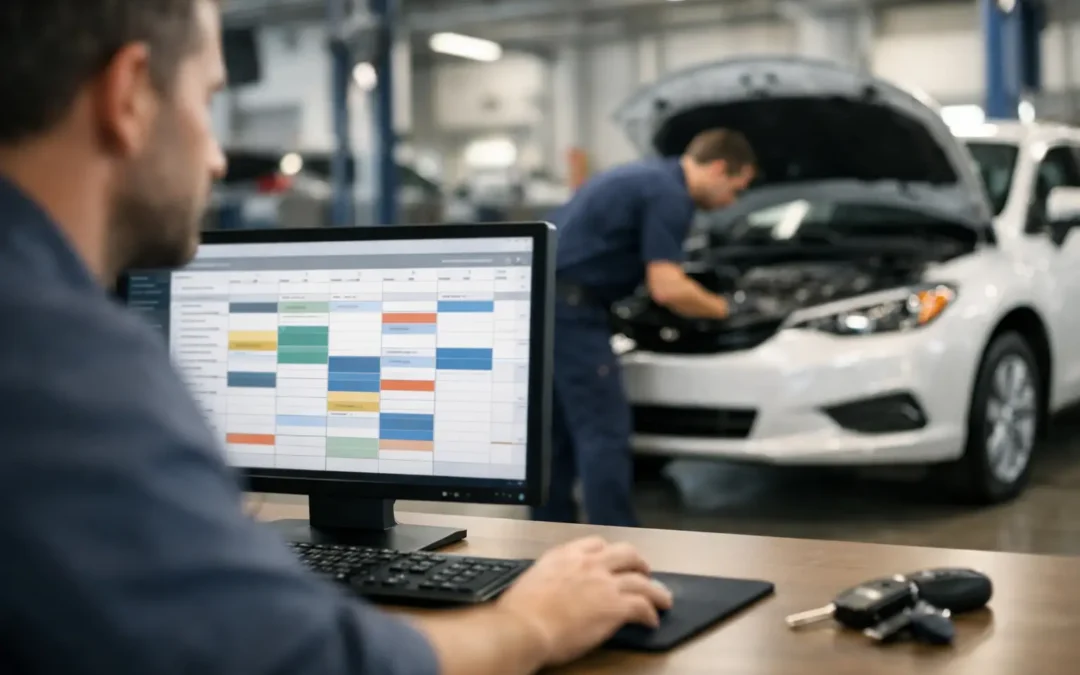
A missed service appointment is not just an empty repair order. It is lost labor hours, lower technician productivity, a frustrated advisor, and a customer who may try the independent shop next time. Your dealership service scheduling process has to do more than fill a calendar. It has to protect capacity, create a clear customer promise, and give fixed ops leaders control of every interaction.
Start With One CRM-Owned Scheduling Process
If advisors, a Service BDC, online scheduling tools, and an outsourced call center all book appointments differently, the calendar becomes fiction. Customers arrive without the right parts, at the wrong time, or expecting work the store cannot complete that day.
Set one process inside the CRM or approved scheduling platform. Every appointment needs the same minimum information: customer and vehicle verification, concern or maintenance need, transportation requirements, preferred communication channel, promised arrival window, and advisor or lane assignment when applicable. A vague note like “needs service” is not an appointment record. It is a problem handed to the drive.
The Service BDC should confirm open campaigns, declined work, maintenance intervals, and prior visit history before offering times. That gives the customer a relevant reason to come in and gives the advisor a better starting point.
Schedule to Shop Capacity, Not Hope
A full day is not automatically a productive day. Booking 30 arrivals into a lane built for 20 creates long write-up times, poor communication, and CSI damage. Booking too lightly leaves technicians waiting.
Build appointment rules around actual shop constraints: advisor availability, technician skill mix, express capacity, loaner inventory, parts lead times, and dispatch flow. It depends on the store, but most operations need separate appointment paths for quick maintenance, diagnostics, recalls, heavy repair, and transportation-dependent work.
Your BDC Ninjas need visibility into those rules. Do not ask them to guess. Give them approved appointment types, time windows, escalation steps, and a live point of contact when a customer has an unusual concern.
Confirm Like the Appointment Matters
The first booking call is only the start. Send a confirmation immediately, then use a human follow-up call or text based on customer preference. Confirm the concern, arrival time, transportation plan, and any preparation needed before the visit.
For appointments that have not confirmed, assign a defined follow-up cadence. No vague task queues. No “someone will get to it.” A manager should see attempted contacts, confirmations, cancellations, reschedules, and no-shows every day.
AI can handle after-hours responses, basic scheduling requests, and fast confirmation messages. Human ownership still matters when the repair concern is complex, the customer is upset, or the calendar needs judgment. Human + AI works when both follow the dealership’s process, not a vendor’s generic script.
Measure What Happens After the Booking
Track appointments set, confirmed, shown, written, sold, and lost. Break the numbers out by source, agent, advisor, appointment type, and day of week. A high set count means nothing if show rates are weak or the drive cannot absorb the arrivals.
Listen to calls and mystery shop the process. Are agents offering the next available qualified slot? Are they building value around factory maintenance and safety? Are they documenting concerns accurately? Training should address the actual breakdown, not hand everyone another script.
Your service calendar is a profit and retention tool. Put the process, the customer data, and the accountability back inside your dealership. BDCBill can help your team build a Service BDC process that shows up on the drive.